
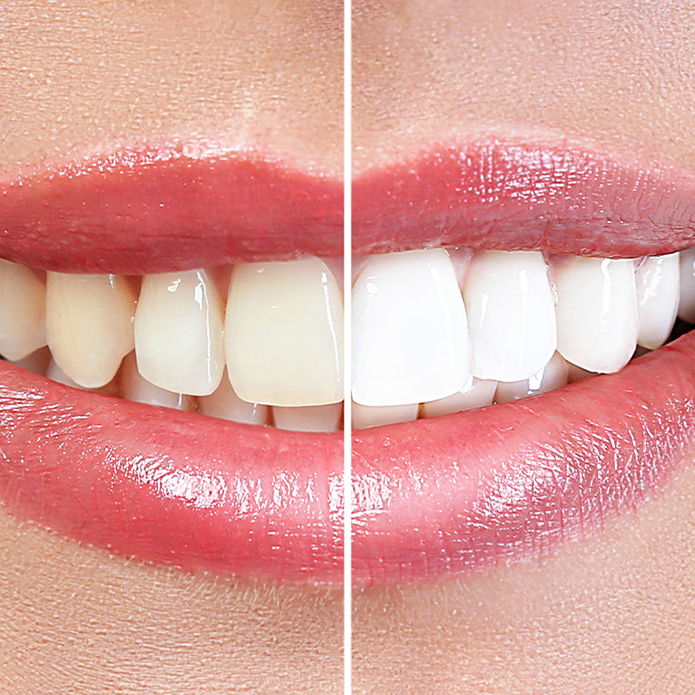
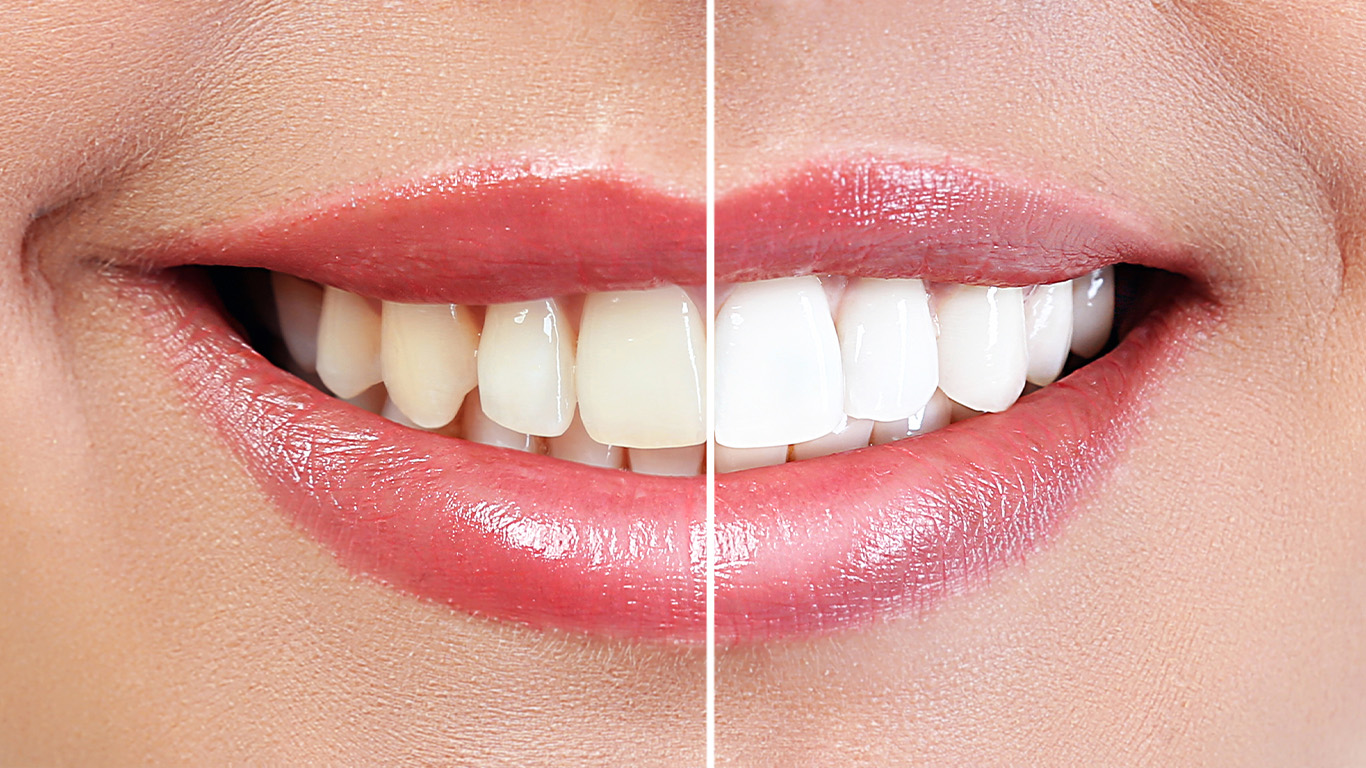
Radiantly white teeth signify health and a well-groomed appearance. It’s no wonder that bleaching is one of the most sought-after services in aesthetic dentistry. However, not every desire for brighter teeth can be fulfilled immediately, and not every product from the drugstore delivers on its promises. We explain how professional bleaching truly works, who is suitable for it, what rules out treatment, and what the process looks like in our practice.
Why do teeth become discolored?
The natural tooth color is primarily determined by the dentin, which lies beneath the enamel and varies in lightness or darkness from person to person. As we age, the enamel thins, the dentin shows through more, and teeth appear yellower.
External influences also play a role. Coffee, black tea, red wine, and nicotine leave color particles on the tooth surfaces. Over time, some of these pigments penetrate the enamel and can no longer be removed by regular brushing. Certain medications, such as tetracycline antibiotics, can also lead to permanent discoloration.
Whitening toothpastes can reduce superficial stains. However, only professional bleaching can lighten the tooth itself and thus change the natural color of the dentin.
Who is suitable for bleaching?
Before we perform a bleaching treatment, we carefully check if the conditions are met. Bleaching is only effective and safe on healthy teeth and gums.
Prerequisites for bleaching:
- Cavity-free teeth: If cavities are present, the bleaching agent can penetrate the tooth’s interior and irritate or damage the nerve.
- Healthy gums: Inflammation or gum pockets must be treated before the procedure. Those suffering from periodontitis should have this treated first.
- No exposed tooth necks: They are sensitive to the bleaching agent and can become more irritated by the treatment.
What rules out bleaching:
Fillings, crowns, bridges, and veneers cannot be lightened by bleaching. They retain their original color. If you have many visible restorations in the anterior region, you should consider this before deciding, as a color difference may arise after bleaching.
Also, in the case of active dental diseases, we wait until the treatment is completed. We generally advise pregnant and breastfeeding women against bleaching, as the effects of the active ingredients during this phase are not sufficiently researched.
For sensitive teeth, an individual assessment is necessary. In some cases, bleaching is possible; in others, we recommend desensitization first.
In-Office Bleaching vs. Home Bleaching: What’s the difference?
Those who opt for professional teeth whitening generally have two options. Both lead to a visible result but differ in process, time commitment, and intensity.
In-office bleaching takes place entirely in the practice. We apply a highly concentrated bleaching gel to the teeth and activate it with a special lamp or light. The gums are carefully covered beforehand to prevent the gel from coming into contact with the soft tissue. The result is immediately visible after the treatment. One appointment is sufficient in many cases.
At-home bleaching also begins at the practice. We create a custom-made, perfectly fitting tray based on an impression. The patient then fills this tray at home with a lower-concentration bleaching gel and wears it for a few hours each day, and in some cases overnight. The treatment usually lasts two to three weeks. The result is comparable to in-office bleaching, but it develops gradually.
Drugstore products such as bleaching strips, whitening pens, or gels contain a maximum of 0.1 percent hydrogen peroxide in Germany. This is legally mandated and insufficient for noticeable whitening in practice. Professional in-office bleaching uses significantly higher, dentist-controlled concentrations.
We clarify which method is better suited for a person during a consultation. The initial situation, timeline, and personal preference play a role.
How does a bleaching treatment work in our practice?
The process follows a clear scheme. We proceed in four steps.
Step 1: Consultation and suitability check
Before we start, we thoroughly examine your teeth and gums. We check for cavities, inflammation, or other findings that would rule out immediate treatment. If you have many fillings or crowns in the visible area, we will openly inform you whether bleaching is advisable in this case and what realistic results can be expected.
Step 2: Professional teeth cleaning
Before the actual bleaching, we perform a professional teeth cleaning. Plaque, tartar, and superficial discolorations are removed. This is not an optional step. Only on clean teeth can the bleaching gel penetrate the enamel evenly and produce a homogeneous result.
Step 3: Bleaching with gel and light activation
The gums are covered with an elastic protective barrier. Then, we apply the bleaching gel evenly to the tooth surfaces. A special lamp activates the active ingredient and accelerates the whitening process. The gel acts for about 15 to 20 minutes, is rinsed off, and repeated depending on the desired result. The result is immediately visible.
Step 4: Result check and aftercare tips
After the treatment, we check the result and discuss how to maintain the new tooth color for as long as possible. This includes specific advice on diet during the first 48 hours and long-term dental care.
How long does the result last and how do I maintain it?
The durability of bleaching largely depends on individual lifestyle habits. Typically, the result remains visible for one to two years. Those who consume little coffee, red wine, and nicotine and regularly undergo professional teeth cleaning can significantly prolong the effect.
For the first 48 hours after treatment, we recommend avoiding strongly staining foods and drinks. These include coffee, tea, red wine, tomato sauces, curry, and nicotine. During this period, teeth are particularly receptive to color pigments.
We generally advise against whitening toothpastes with highly abrasive polishing agents for long-term use. They don’t truly whiten but attack the enamel and can make it more sensitive over time. Better: a fluoride-containing standard toothpaste and professional teeth cleaning twice a year.
Summary
Bleaching is a safe and effective method to whiten teeth, provided the prerequisites are met. Healthy gums, cavity-free teeth, and realistic expectations are the foundation for a good result. Fillings and crowns cannot be whitened; this is part of the honest disclosure before any treatment.
If you are interested in professional bleaching in our practice, you are in good hands with us. We provide individual advice, carefully check your oral health, and discuss together which method will lead to the desired result. Consultation appointments can be booked online at short notice.
Frequently Asked Questions about Bleaching
With healthy teeth and proper execution, no permanent damage is to be expected. Temporary sensitivity directly after the treatment is normal and usually subsides after a few days.
That depends on the cause of the sensitivity. We clarify this during the consultation. In some cases, prior treatment is advisable; in others, the bleaching can be adjusted.
If fillings or crowns are present in the visible anterior region, we discuss this before the treatment. We show what results are realistic and whether a later adjustment of the restorations would be advisable.
No. Bleaching is a cosmetic service and is not covered by statutory health insurance. Patients bear the costs entirely themselves. Some supplementary dental insurance policies reimburse a portion.
Repetition is usually possible after one to two years if the result has faded. We do not recommend more frequent bleaching, as repeated applications can stress the tooth enamel.
In the first 48 hours, strongly staining foods and drinks such as coffee, red wine, tea, and tomato sauces should be avoided. Water, light-colored foods, and dairy products are unproblematic during this time.