
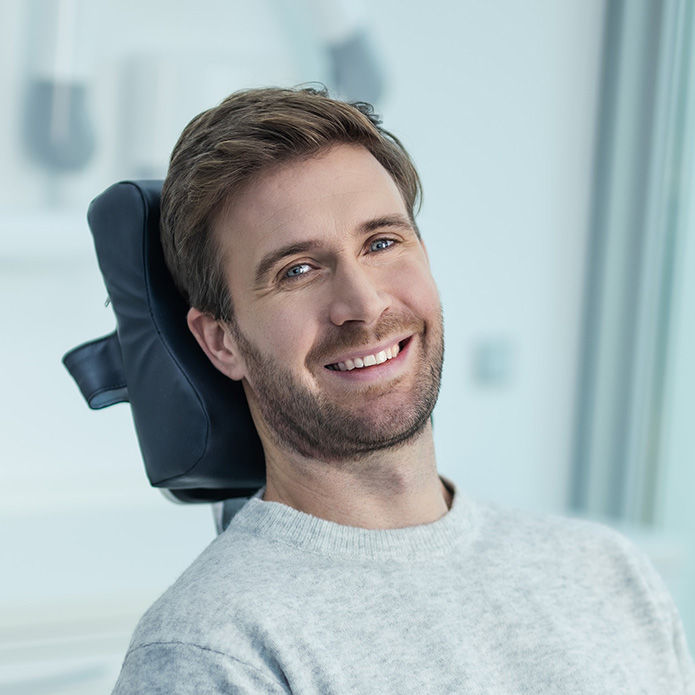

Around one in five people has dental anxiety. In Germany, that’s an estimated 10 million people who associate the thought of a dental appointment with unease, a racing heart, or even real panic. Dental anxiety is therefore not an exception, but a widespread reality. The good news: modern dentistry has fundamentally changed. Treatments today are less painful, shorter, and more comfortable than they were a few decades ago. If you understand your dental anxiety, it’s easier to find a way to overcome it.
Where does dental anxiety come from?
Dental anxiety rarely has a single trigger. Most of the time, it’s a combination of different factors that has built up over years.
Common causes include negative experiences in childhood, when a treatment was more painful or frightening than expected. Such memories leave a deep impression. Sometimes the sound of a drill or the typical smell of a dental practice is enough to trigger physical stress reactions.
Another common factor is the feeling of losing control. Lying in the dental chair with your mouth wide open and instruments above your face can make you feel at someone else’s mercy. For many people, this loss of control is what’s truly distressing—not necessarily the pain itself.
Dental anxiety can also be passed on. According to a study by the University of St Andrews, children whose parents talk anxiously about dental visits are more likely to develop similar fears. This isn’t a conscious process, but unconscious learning through observation.
Why it’s important to see the dentist early—even if you’re anxious
Many anxious patients put off appointments for as long as possible until pain forces them to come in. That’s humanly understandable, but it reinforces the anxiety in the long run.
The longer it has been since the last dental visit, the more likely it is that more extensive treatment will be needed. More extensive treatments feel even more threatening to anxious patients. A classic vicious circle.
The way out is to take that first step early. A first appointment doesn’t have to be a treatment appointment. Many practices offer the option of simply coming by first: no treatment, no pressure—just to get to know the practice. You’ll be shown around, the team introduces itself, and questions are answered. This first conversation takes little time and removes much of the fear from the visit.
Regular check-ups—even short, straightforward ones—also help you build positive experiences. Over time, your inner attitude toward dental visits changes. It doesn’t happen overnight, but it does happen.
What modern dentistry offers anxious patients
Dentistry has developed significantly over recent decades. Procedures that used to be unpleasant or painful are now much gentler. Digital technology makes treatments more precise and shorter. What used to take several sessions can often be completed in a single appointment today.
Today, anxious patients have various options available to make treatment more comfortable.
Gentle anaesthesia
Modern local anaesthetics work reliably and are dosed so precisely that treatment is usually pain-free. If you’re afraid of injections, you can say so openly. There are techniques that make anaesthesia particularly gentle—for example, using a topical anaesthetic on the mucosa beforehand.
Treatment with twilight sedation
With twilight sedation (also called sedation), the person receives a calming and pain-relieving medication via an infusion. They remain responsive, but are in a relaxed, half-asleep state and hardly notice the treatment. The risks are significantly lower than with general anaesthesia. Many anxious patients experience this form of treatment as a real turning point.
Treatment under general anaesthesia
For severe dental phobias where even minor procedures aren’t possible, some practices offer treatment under general anaesthesia in cooperation with an experienced anaesthetist. This is the most intensive option and not necessary for everyone, but for some it is the only way to have urgently needed treatment carried out.
Stop signal and transparency
A simple but effective tool: before treatment, you agree on a clear hand signal that means “please stop”. The dentist immediately pauses, puts instruments down, and allows time for a break. Simply knowing you can interrupt at any time significantly reduces the feeling of helplessness.
Distraction during treatment
Headphones with your favourite music, screens on the ceiling, or guided breathing exercises help many people stay calmer during treatment. What helps varies from person to person. A conversation beforehand clarifies which option fits best.
Practical tips: how to prepare for your appointment
In addition to what the practice offers, there are a few things you can do yourself to make the dental visit easier.
Talk openly about your anxiety: Say directly when booking the appointment that you have dental anxiety. A good practice will be prepared for this, schedule more time, and make sure you don’t have to sit in the waiting room for long.
Bring someone with you: Knowing a trusted person is in the waiting room gives many anxious patients a sense of security. In some practices, the accompanying person may also be allowed into the treatment room.
Choose your appointment time deliberately: Avoid stressful times of day. An appointment early in the morning, when the practice is still quiet, feels more relaxed for many people than one in the middle of the hustle and bustle.
Use breathing exercises: Deep, slow breathing activates the parasympathetic nervous system and reduces physical stress symptoms. Inhale for four seconds, hold briefly, exhale for six seconds. This also works in the dental chair.
Plan small steps: If you haven’t been to the dentist in a long time, you don’t have to catch up on everything at once. Start with an initial consultation-only appointment, then a short check-up, then continue step by step. Every positive experience makes the next step easier.
Dental anxiety in children: intervene early
Children often develop dental anxiety through the behaviour and statements of the adults around them. Phrases like “It won’t hurt” or “You don’t need to be afraid” often draw attention to the fear in the first place. It’s better to treat the dental visit as something neutral and normal.
An early first visit where nothing is treated and the child simply gets to know the practice lays a good foundation. Paediatric dentists specialise in gently introducing children to the treatment situation and creating positive first experiences.
When dental anxiety becomes a phobia
There is a difference between dental anxiety and dental phobia. Dental anxiety describes an unpleasant feeling that most people can still manage. A true dental phobia exists when the fear is so strong that appointments are completely avoided for months or years, physical symptoms such as a racing heart or sweating occur at the mere thought of it, and the fear burdens everyday life.
In these cases, cognitive behavioural therapy can be useful in addition to dental support. Studies show that around 70% of those affected can reduce or overcome their dental anxiety in the long term through psychotherapeutic methods. The costs are usually covered by statutory health insurance.
Summary
Dental anxiety is common, understandable, and above all, it can be overcome. The crucial first step is not to wait until pain forces you to act, but to seek a conversation early on. Modern treatment options—from gentle anaesthesia and sedation to general anaesthesia—give even severely affected anxious patients real options today.
At mundum, we take dental anxiety seriously. Anyone who calls us or books an online get-to-know-you appointment doesn’t have to have anything treated at the first visit. We listen first.
Frequently asked questions about dental anxiety
Estimates suggest that around 10 million people in Germany have pronounced dental anxiety. Milder unease before a dental visit is even more common and, according to various studies, affects 60 to 80% of the population.
Dental anxiety is an unpleasant feeling that most people can still overcome. Dental phobia is a clinically relevant anxiety disorder in which appointments are completely avoided for long periods of time and the fear impairs everyday life.
Yes, always. A good practice team agrees on a clear hand signal before treatment so that the treatment is stopped immediately. You are not at anyone’s mercy—you can stop at any time.
Yes, in cooperation with an anaesthetist, that is possible. General anaesthesia is the most intensive option and not necessary for everyone, but for severely affected anxious patients it is a real way to receive necessary treatment. The costs are generally not covered by statutory health insurance.
Talk openly about your anxiety, choose your appointment time deliberately, bring someone with you, use breathing exercises, and plan small steps. Every positive experience makes the next visit easier.
For pronounced dental phobia, cognitive behavioural therapy is an effective option. Studies show success rates of around 70%. The costs are usually covered by statutory health insurance.

Zahnärztin
Behandelnde Zahnärztin bei mundum Zahnarztpraxis in Köln
Marlene Neal studierte von 2015 bis 2021 Zahnmedizin und erhielt 2021 ihre Approbation als Zahnärztin. Von November 2021 bis Januar 2023 war sie als Assistenzzahnärztin und wissenschaftliche Mitarbeiterin an der Poliklinik für zahnärztliche Prothetik und Werkstoffkunde der Universität Rostock tätig. Seit 2020 promoviert sie berufsbegleitend. Ihre fachlichen Schwerpunkte liegen in der Allgemeinen Zahnheilkunde, der Zahnersatzkunde, der Konservierenden Zahnheilkunde sowie in der Betreuung von Angstpatient:innen. Heute behandelt Marlene Neal Patient:innen der mundum Zahnarztpraxis am Zülpicher Platz in Köln.