
Periodontitis is a chronic inflammation of the periodontal support tissues. It usually develops unnoticed and progresses without treatment. Early signs often go undetected. Bacteria in the mouth cause the inflammation. If it is not treated, gum and bone loss can occur. As a result, teeth loosen and may fall out. Periodontitis is widespread and affects many people regardless of age. Early detection is crucial for preserving teeth. This article explains how periodontitis develops, which symptoms occur and which treatments are possible. The aim is to provide clear, easy-to-understand information about causes and treatment options.
Periodontitis – definition and distinction
Periodontitis is an inflammatory disease of the periodontal support tissues. It affects the tissue that anchors teeth in the jaw. This includes the gums, periodontal ligament, connective tissue and bone. The inflammation is caused by bacterial deposits that adhere to the gum line. If left untreated, periodontitis can lead to the destruction of these structures.
In contrast, gingivitis is a superficial inflammation of the gums. It does not cause permanent damage. However, if gingivitis is not treated, it can develop into periodontitis.
Periodontitis usually progresses slowly. The condition causes no pain for a long time. Visible damage only appears at an advanced stage. As it does not heal on its own, targeted treatment is necessary.
Diagnosis is made through a clinical examination and measurement of periodontal pocket depth. X-rays help assess the condition of the bone. Periodontitis is a serious condition with long-term consequences for oral health.
Recognising periodontitis early – typical symptoms
Periodontitis develops gradually. The first signs are often subtle and are not associated with inflammation.
The most common symptoms include:
- bleeding gums, especially when brushing
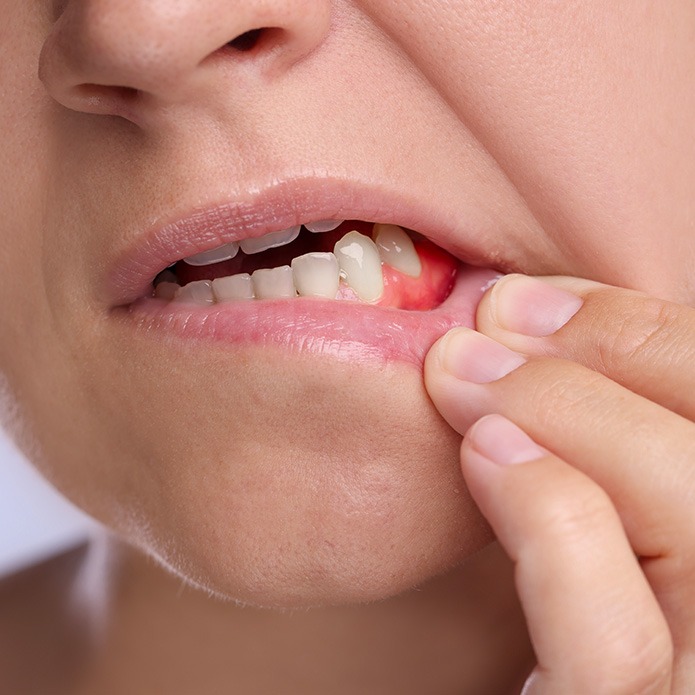
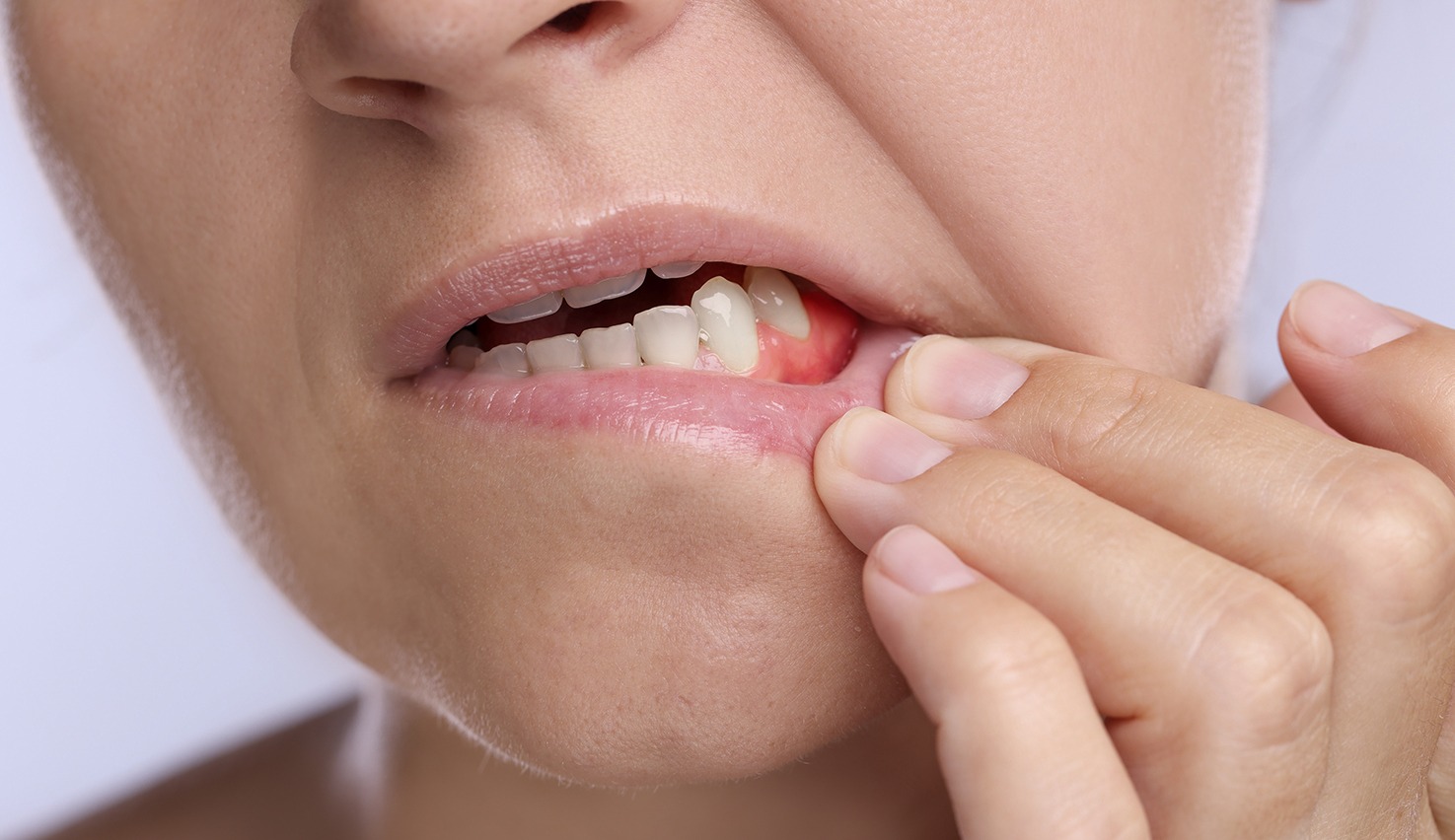
- red or swollen gums
- persistent bad breath despite good oral hygiene
- sensitive gums or a feeling of pressure on individual teeth
As the disease progresses, further changes occur:
- Gums recede
- Teeth appear longer
- Gaps between teeth appear larger
- Teeth become loose
Symptoms intensify slowly. Many affected people do not notice any pain for a long time. This is why periodontitis often goes undetected. Early warning signs should be taken seriously.
Regular check-ups at the dental practice help detect the condition early. The dental team can identify initial changes before permanent damage occurs.
A timely diagnosis is crucial. The earlier periodontitis is detected, the better its progression can be stopped. Early symptoms allow effective treatment without surgical measures.
Causes and risk factors of periodontitis
The main cause of periodontitis is bacterial plaque. If it remains on the teeth for a prolonged period, inflammation develops. The immune system reacts to the bacteria and triggers a defence response. This can damage the tissue in the periodontal support tissues.
Not everyone automatically develops periodontitis. Various risk factors influence the course of the disease:
- Smoking: reduces blood flow in the gums
- Diabetes mellitus: promotes inflammatory processes
- Genetic predisposition: increases the risk regardless of oral hygiene
- Unfavourable diet: promotes bacterial growth
- Chronic stress: weakens the immune system
- Hormonal changes: e.g. during pregnancy or menopause
Poorly fitting dentures or overhanging fillings can also promote inflammation. In risk cases, regular dental care alone is often not enough.
An individual risk assessment helps with targeted prevention. The combination of bacterial influences and personal risk factors determines how quickly periodontitis develops and how it progresses.
Conservative treatment options for periodontitis
Treatment of periodontitis usually begins with non-surgical measures. The aim is to reduce inflammation and stop tissue loss.
A key component is professional teeth cleaning. Hard and soft deposits are removed. The areas below the gum line are particularly important.
This is followed by closed periodontal therapy. The root surfaces are mechanically cleaned. This step is also known as scaling and root planing. The surfaces are smoothed to make renewed bacterial colonisation more difficult.
In some cases, supportive medication is useful. Antibacterial rinses or locally applied antibiotics can enhance the effect. The choice of medication depends on the findings.
Treatment is carried out over several appointments. Careful follow-up care is crucial. Without regular monitoring, the condition can worsen again.
Conservative measures are often sufficient to bring the inflammation under control. However, if the disease is more advanced, surgical therapy may be necessary. In every case, the goal remains to stabilise the periodontal support tissues in the long term.
Surgical treatment – resective periodontal surgery
If conservative measures are not sufficient, resective periodontal surgery is used. This method surgically reduces deep periodontal pockets.
The aim is to remove inflamed tissue and improve the bone contour. This allows the periodontal support tissues to recover at a more stable level.
The procedure begins by gaining access to the affected area. The gums are lifted to make inflamed tissue visible. This is followed by the targeted removal of damaged structures.
Irregular bone contours can also be smoothed. This creates an environment that is easier to care for in the long term. Depending on the situation, the area may also be treated with regenerative materials.
After the procedure, the gums are repositioned and sutured. Wound healing is monitored regularly. Pain after the procedure is usually mild and easy to manage.
This form of therapy is used for advanced periodontitis. It serves to stabilise the periodontal support tissues in the long term. The aim is not only repair, but ideally regeneration of the affected tissue.
Pre-prosthetic periodontal therapy – preparation for dental restorations
Pre-prosthetic periodontal therapy specifically prepares the periodontal support tissues for dental restorations. It is not a substitute for periodontitis treatment, but a complementary measure.
The aim is to create a stable foundation for bridges, crowns or implants. To achieve this, bone and soft-tissue defects are corrected. These often arise as a result of inflammation or tooth loss.
Depending on the findings, different measures are used:
- Flattening irregular bone contours
- Removing excess gum tissue
- Building up tissue when substance is missing
The procedures are performed under local anaesthesia. After the healing phase, the tissue is more resilient and easier to restore.
This surgical preparation increases the chances of success for prosthetic restorations. Dentures fit more securely and are easier to clean. This has a positive effect on durability and function.
Not every situation requires pre-prosthetic therapy. The decision is made individually after a clinical examination and planning of the dental restoration.
Pre-prosthetic periodontal surgery combines functional and aesthetic goals. It makes it possible to implement prosthetic solutions on a healthy, stable foundation.
Summary
Periodontitis is a chronic condition that, without treatment, leads to damage of the periodontal support tissues. As a dental practice with many years of experience, we at mundum provide comprehensive advice on diagnosis and therapy.
Our goal at mundum is to detect inflammation early and treat it individually. To this end, we offer modern methods in our practice such as closed periodontal therapy, antibacterial rinses and, if necessary, surgical procedures.
If the condition is more advanced, we perform resective and pre-prosthetic periodontal surgery directly on site. These treatments are precisely planned and supported by digital diagnostics and intraoral scanners.
In close coordination with our in-house laboratory, we provide precisely fitting dental restorations when loss of substance makes prosthetic treatment necessary.
A structured follow-up plan is part of every therapy. In this way, we support our patients in maintaining their oral health in the long term.
At the first signs of periodontitis, we recommend an examination at our practice. Together, we will develop a suitable treatment strategy—tailored to the individual findings and your personal situation.
FAQ – Key questions about periodontitis
Gingivitis is a superficial inflammation of the gums. Periodontitis also affects the tooth-supporting tissues and can lead to tissue loss.
Periodontitis can be stopped, but not completely reversed. The goal is stable oral health.
First, a thorough cleaning is carried out. If necessary, surgical measures follow to stabilise the tissue.
Regular check-ups and professional teeth cleanings are important to prevent the inflammation from flaring up again.
Statutory health insurers cover basic treatments. Additional costs may arise for extended therapies.
Not necessarily. If periodontitis is detected and treated early, it can help preserve your teeth.
Good oral hygiene, a healthy diet and regular dental visits significantly reduce the risk.

Zahnarzt & Geschäftsführer
Praxisinhaber, behandelnder Zahnarzt und Implantologe bei mundum Zahnarztpraxis in Köln
Carsten Sonnenburg studierte von 2013 bis 2018 Zahnmedizin und erhielt im selben Jahr seine Approbation als Zahnarzt. Seine praktische Ausbildung vertiefte er von 2019 bis 2021 als Vorbereitungsassistent an der Poliklinik für Zahnerhaltung und Parodontologie der Universität Rostock, bevor er 2021 als Assistenzzahnarzt zu mundum wechselte. Zusätzlich war er 2019/2020 als Referent für die Zahnärztekammer Mecklenburg-Vorpommern tätig. Seine fachlichen Schwerpunkte liegen in der Zahnerhaltung, Implantologie und im ästhetischen Zahnersatz; 2018 schloss er das CEREC-3D-Curriculum für digitalen Zahnersatz an der Universitätsmedizin Rostock ab, 2024 folgte ein Curriculum Implantologie. Seit 2018 promoviert er berufsbegleitend. Heute leitet Carsten Sonnenburg die mundum Zahnarztpraxis am Zülpicher Platz in Köln als Zahnarzt und Geschäftsführer.
Doctolib | Jameda | TrustedDentist | Profil